
Traffic as a Mirror of Society: When Did We Lose the Ability to Wait?
Can aggressive driving reveal something deeper about the society we live in? Between everyday haste, intolerance, and the accelerating pace of modern life, traffic may be one of the places where our difficulties in living together become most visible.
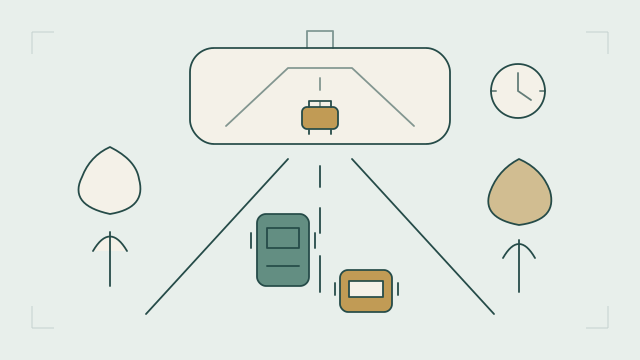
Imagine a Sunday morning in autumn. The sky is blue, the trees display different shades of red, yellow, and orange, and you are driving peacefully, respecting the speed limit. There is no urgency. The journey itself could be part of the pleasure of that day.
Suddenly, a vehicle approaches rapidly from behind. The driver follows dangerously close, as if your presence were an intolerable obstacle. You are following the rules, yet you seem to be committing an offense simply because you do not share someone else's sense of urgency.
The situation is so common that we rarely stop to reflect on its meaning.
Why are we so impatient? And what does this impatience reveal about the society we live in?
Perhaps traffic is much more than a system of roads, vehicles, and traffic signs. Perhaps it is one of the most spontaneous reflections of how we behave when we must share the same space with people we do not know. After all, driving requires something fundamental to any society: recognizing that we are not alone, that common rules exist, and that our interests cannot always take precedence over those of others.
Yet it takes only a few minutes of observing traffic to see how these seemingly simple requirements can become sources of conflict. A driver who takes a few seconds to move forward is met with an impatient honk. Another tries to change lanes and encounters someone willing to accelerate simply to prevent them from merging. A misunderstood passing maneuver can provoke offensive gestures, pursuits, and, in extreme cases, violent confrontations. Minor incidents that would hardly justify such reactions in other settings seem to take on extraordinary proportions when we are behind the wheel.
What happens to us when we get into a car? Why can ordinary situations trigger such intense reactions? Perhaps part of the explanation lies in the way we begin to perceive others. Inside our vehicles, protected by doors, windows, and a metal frame, we see other drivers primarily as cars that occupy space, slow us down, or interfere with our plans. The person disappears behind the machine. We forget that the vehicle ahead is also being driven by someone with concerns, responsibilities, limitations, and a personal history we know nothing about.
But there is an even more interesting dimension to this question. We live in the 21st century, surrounded by technologies designed to make virtually everything faster. We can communicate instantly with someone on the other side of the planet, perform banking transactions in seconds, access information at any moment, and obtain almost immediate answers from artificial intelligence systems. Activities that once required hours, days, or weeks can now be completed with a few taps on a screen.
Paradoxically, despite all these technological achievements, it seems that we have never had so much difficulty waiting.
Naturally, this perception does not mean that previous generations were necessarily more patient or that today's society is demonstrably more aggressive. Human behavior has always involved conflict, impatience, and rivalry. Nevertheless, the transformation of our relationship with time raises an important question: is the speed made possible by technology also changing our expectations of other people's behavior?
When we become accustomed to receiving instant responses, any delay can seem excessive. When we organize our activities around increasingly packed schedules, a minor unforeseen event can become a threat to our plans for the day. And when efficiency becomes a permanent requirement, even the simple act of waiting can begin to be perceived as a waste of time.
Traffic provides a particularly revealing setting for this contradiction. We have developed sophisticated automobiles, navigation systems capable of calculating routes in real time, and infrastructure designed to make transportation easier. Even so, we remain dependent on something that no technology can completely eliminate: the need to share the road with other people.
And sharing means accepting limits. It means understanding that a traffic light will not change color simply because we are running late, that the vehicle ahead has the same right to use the road, and that not everyone experiences time with the same sense of urgency.
Perhaps it is precisely this inability to control other people's pace that causes so much irritation. In much of our digital lives, we are accustomed to controlling processes with a simple touch. We can speed up a video, interrupt a conversation, select the content we want to consume, and immediately abandon anything that does not interest us. In traffic, however, we encounter a reality that does not conform to our individual preferences. The world continues to exist independently of our will.
It would also be simplistic to attribute all aggression to technology or individual impatience. Financial pressures, professional difficulties, fatigue, traffic congestion, infrastructure problems, and personal circumstances can all contribute to making people less tolerant of frustration. At times, an aggressive driver may be expressing tensions that accumulated long before getting into the vehicle. This does not justify dangerous behavior, but it helps explain why an apparently insignificant situation can trigger a disproportionate reaction.
For this reason, observing traffic in a city can offer interesting clues about how its residents live together, although it cannot, on its own, measure the level of suffering, civility, or well-being of that population. Road conditions, traffic enforcement, local habits, and many other factors influence driver behavior. Even so, the frequency with which minor frustrations turn into hostility deserves attention because it reveals something about our ability to deal with limits and differences.
The issue also extends beyond the streets. We can recognize similar behaviors in supermarket lines, workplaces, customer service environments, and discussions on social media. People interrupt one another, show irritation when confronted with different opinions, or interpret minor setbacks as personal offenses. These are different situations, but they invite a common reflection: to what extent are we preserving our willingness to live with what we cannot control?
A society does not depend solely on laws, institutions, and technological advances. It also depends on small everyday behaviors that rarely receive attention: waiting our turn, letting someone go ahead, acknowledging a mistake, showing consideration, and accepting that other people have needs different from our own. These are modest gestures, but they represent an essential part of human coexistence.
There is something particularly symbolic about that Sunday morning in autumn. Two drivers travel along the same road, under the same sky, surrounded by the same trees. One appreciates the scenery and finds satisfaction in the journey itself. The other seems to experience every second as an intolerable delay. We do not know their circumstances, nor would it be fair to judge their lives based on a few moments behind the wheel. But the contrast between these two ways of experiencing the journey reveals a profoundly contemporary question.
We are developing technologies to save time, but are we learning to make better use of the time we save?
Perhaps part of our restlessness comes from the difficulty of recognizing that not every moment needs to be productive, that not every journey needs to be completed as quickly as possible, and that not every wait represents a loss. Sometimes, life unfolds precisely in the intervals we try to eliminate.
This does not mean advocating slowness as a rule, ignoring commitments, or turning tranquility into an obligation. It simply means recognizing that there is a difference between using speed as a resource and allowing urgency to become a permanent condition of existence.
In this sense, traffic can be understood as a small mirror of contemporary society. Within it, we find our technological achievements, our need for collective organization, our individual tensions, and our difficulty accepting that the world does not function exclusively according to our desires.
Perhaps we will never be able to completely eliminate aggression from our roads. But we can reflect on what it represents and, above all, on how we choose to participate in this shared space.
Because driving should not be a permanent competition to determine who arrives first. It should be, above all, an exercise in responsibility, respect, and coexistence.
And perhaps the most important question is not why someone is in such a hurry on a peaceful road on a Sunday morning. Perhaps it is another, deeper question, one that extends beyond traffic and reaches into the very way we are shaping our lives.
If a society becomes increasingly fast, connected, and technologically efficient, while its members find it increasingly difficult to wait, tolerate differences, and live together, can we truly say that we are learning to live better?
And for those who, after all these reflections, still have to face traffic next Monday, it may be worth recalling an ancient lesson from Stoicism: we cannot control other people's behavior, but we can choose how we respond to it.
If someone approaches your vehicle dangerously closely, shows impatience, or seems determined to turn the road into a competition, remember that their urgency does not have to become yours. Drive safely, avoid confrontations, and, whenever possible, let them go on their way.
After all, we do not need to win any imaginary competition on the road. We simply need to reach our destination safely.
And if it happens to be a beautiful autumn Sunday, there may be an even better reason not to join that race: while someone is obsessively concerned with arriving a few seconds earlier, you can still appreciate the trees, the blue sky, and the scenery around you.
Ultimately, perhaps true freedom does not lie in overtaking everyone else, but in refusing to let their haste dictate the pace of our own lives.
Author's Note
This essay presents a personal reflection on aggressive driving and its possible connections to the accelerating pace of contemporary life, technological transformations, and the challenges of social coexistence. The situations described are illustrative and are not intended to establish scientific conclusions about driver behavior or to claim that today's society is more aggressive than in previous periods. The interpretations and questions presented reflect the author's perspective and seek to encourage critical reflection on our relationship with time and with others.
© 2026 AI Human Books — All rights reserved.